By Madeleine Parkin, PR account manager at Abode Worldwide
The Vacation Rental World Summit is a special conference. It’s two days of fascinating panels and engaging roundtable discussions, filled with interesting people and (if at all possible) a little sightseeing — especially as the conference hops from beautiful destination to beautiful destination, from Porto to Como, Barcelona to Annecy, and this year, Rome.
What makes VRWS so special, apart from the great locations, is the meaningful conversations. Each attendee is assigned to a series of roundtables during the conference, where we discuss our challenges, solutions, and questions with other professionals. It encourages attendees to speak with people outside of their normal circle and to learn from everyone. From brand-new hosts to CEOs.
Here are the five biggest trends we spotted at the conference:
1. AI is reshaping the industry, but it’s not a silver bullet
The buzz around artificial intelligence is beginning to die down, as it becomes less futuristic and more everyday. Wider-spread implementation is having an impact, as we saw with AirDNA’s Jamie Lane in his opening presentation: larger property managers are already seeing tangible gains in guest review scores, particularly for communication.
But most property managers aren’t yet fully on board with AI’s biggest wins right now, which are in operations: automated reporting, task management, and other ‘busywork’ that takes managers away from the people-focused side of their business.
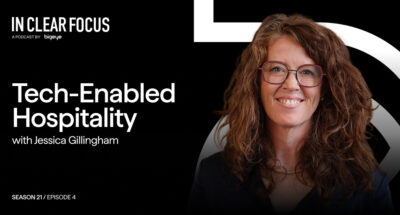
Crucially, as Hostaway, Jurny, and Dharma discussed on a panel moderated by Abode Worldwide’s Founder, Jessica Gillingham, AI is only as good as the data you feed it. To make it work well, operators need to take the time to clean up their data and implement AI carefully, identifying where it really works.
2. Guest experience is really expectation management
One of the most insightful takeaways, from Beyond’s Noemi Oreglia on a revenue management panel, was deceptively simple: “value” isn’t objective. It’s about how well the experience matches the guest’s expectations. Premium pricing, for example, needs to be backed by a premium story — in your copy, photography, and service.
What guests expect from check-in, service, and even communication varies massively. The most successful managers are mapping guest preferences early and building experiences to match, whether for the high-touch Baby Boomer or the low-touch digital nomad.
3. Booking trends are shifting, and not for the better
As Key Data’s Sally Henry shared, opening up day two of VRWS, booking windows are getting shorter worldwide. Last-minute bookings now make up a big chunk of total bookings — but not of revenue. While it’s great for guests to be able to get a last-minute deal, the trend is forcing property managers to lower rates, and ultimately run the risk of making less money. Longer-lead bookings (60–179 days) bring in more revenue.
Property managers need to refine their strategies to capture those guests who are looking further in advance, and maximize revenue through direct booking, upsells, and flexible offerings.
4. Owner acquisition and growth still come down to people skills
When it comes to expanding property management businesses, tech helps, but it’s relationships that drive growth. The most successful managers focus on building trust, which retains owners and encourages them to become advocates for your services. That means knowing your market, following through on promises, and actually answering the phone.
Vintory’s D. Brooke Pfauz shared the results of his team’s mystery shopping of 100 property managers, posing as owners interested in their services. Only 34% of managers answered owner calls, and just 57% returned them. That’s a massive missed opportunity, which bigger platforms or national operators simply wouldn’t miss. As many owners are older, picking up the phone is vital to gain their trust.
Likewise, property managers regularly mentioned that finding and retaining good cleaners is a huge challenge. Unfortunately, we haven’t found a tech tool that can do that just yet, so building those relationships is still vital to success.
5. Redrawing the map: regulation risk, diversification, and international travel patterns
The playbook of ten years ago is no longer valid. Portfolio diversification is now a strategic necessity, encompassing various property types, locations, and contract lengths. With regulatory uncertainty on the rise, it makes sense to hedge your bets.
Meanwhile, the luxury segment continues to outperform, and international travel is shifting — outbound US travel is soaring, while inbound remains sluggish, again per AirDNA. Strong revenue management relies on keeping up with these broader macroeconomic trends as well as local events and seasonality.
It’s still about people
For all the talk of tools and tech, the human element was impossible to ignore. Owners and guests remain the most complex challenges to “solve,” because they’re not problems on a page — they’re people. Conversations at VRWS highlighted that personal connection, context, and community still matter deeply.
It’s also why events like these matter. The best insights aren’t just shared on stage, they’re the fruit of conversations at booths and over dinner. This industry thrives on connection, and in-person events are vital to that.
About Madeleine Parkin
Madeleine is a PR Account Manager at Abode Worldwide, a B2B public relations agency focused on raising the profile of transformative technology solutions and enterprise operators in the global hospitality, lodging and living sectors. Madeleine draws on more than six years of experience working with customers, owners, and press in the short-term rental sector to help the industry grow and shine.