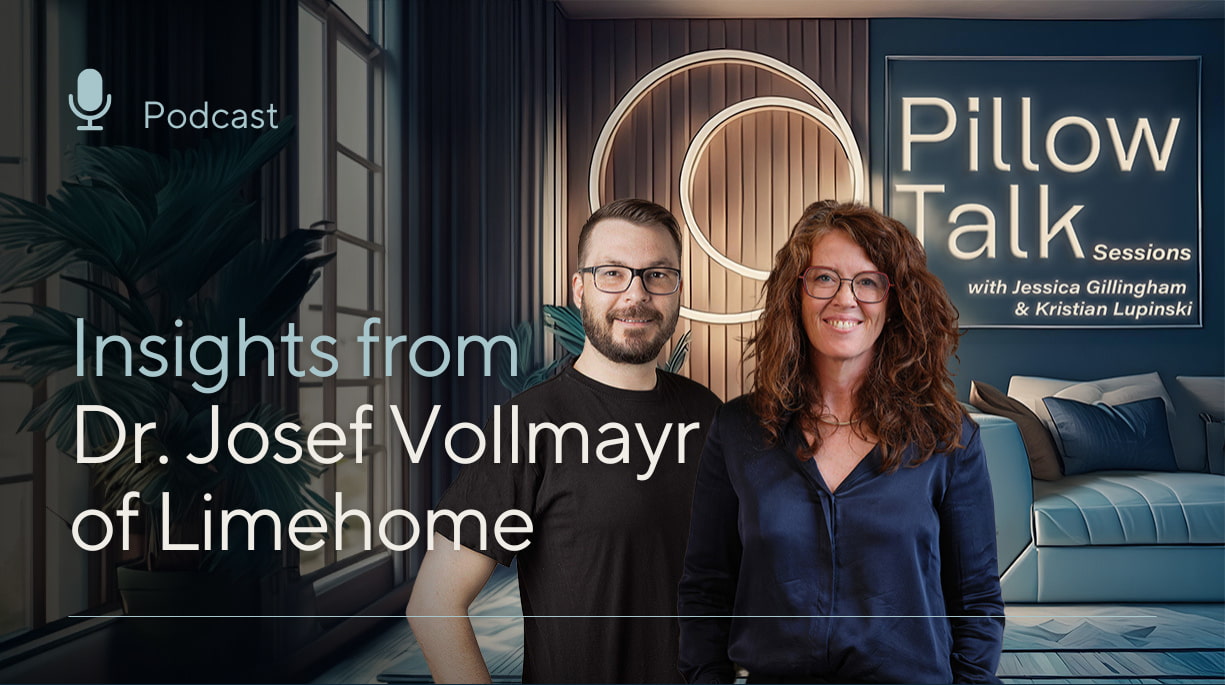
In this episode of Pillow Talk Sessions, Dr. Josef Vollmayr, Co-Founder and Managing Director of Limehome, joins hosts Jessica Gillingham and Kristian Lupinski to explore how the brand is reshaping the hospitality sector through a technology-first approach. With a background in consulting at McKinsey and nearly seven years at the helm of Limehome, Josef brings a clear, data-informed perspective to what hospitality can be when simplicity, scalability, and guest needs take priority.
Limehome currently operates over 11,000 units across Europe, with 85% of reservations handled without any manual intervention. With its presence in both major cities like Berlin and Madrid and secondary markets across B, C, and D-tier cities, Limehome is not only scaling fast—it’s doing so with impressive operational efficiency and a focus on guest experience that meets the expectations of today’s digital-native traveler.
At the core of Limehome’s philosophy is the belief that most travelers don’t want extravagance—they want efficiency. Josef explains that while luxury and high-touch service still play a role for around 10% of guests, 65% of modern travelers—primarily millennials and younger—prioritize clean, functional, well-designed stays over traditional hotel services. For this audience, self-service isn’t a compromise—it’s a preference.
Limehome has embraced that reality, building a model that eliminates unnecessary amenities, reduces operating costs, and reinvests in guest-facing features that actually improve the stay. The result is a business that operates at 72% space efficiency, far outpacing traditional hotels, which average closer to 50%. That efficiency isn’t just about layout—it’s about removing costly elements like on-site F&B, oversized back-of-house spaces, and large reception teams, without compromising the core guest experience.
Still, Josef is candid about the challenges operators face. Rising staff costs in Germany (projected at 6–7% annually), minimum wage increases, and a 50% surge in construction costs since 2020 are all putting pressure on margins. Energy prices have also risen significantly. In this climate, operators chasing direct bookings for the sake of margin risk losing the bigger picture.
Instead, Josef argues for a smarter approach to distribution strategy. Limehome continues to embrace OTAs as a key channel, recognizing that while commissions are higher, these platforms deliver unmatched visibility and strong ADRs. Rather than forcing guests to book direct, Limehome focuses on post-booking engagement—drawing them into a proprietary app experience that facilitates check-in, builds loyalty, and encourages direct booking next time.
This post-OTA strategy is part of a broader shift in hospitality thinking: don’t chase short-term channel wins—optimize for lifetime value. With most guests staying just 2 to 2.5 nights, the tech stack needs to be intuitive, mobile-first, and low-friction. Josef notes that smart devices often complicate the stay more than they enhance it. Most guests, he says, don’t want to figure out how to use a digital thermostat—they just want to open a window.
Limehome’s backend tells the real story. A deeply integrated, digital-first infrastructure enables fast scaling and consistent service across geographies. Behind the scenes, analytics power everything from room usage and check-in trends to cleaning efficiency and energy management.
Looking ahead, Limehome is preparing to launch its first UK and French properties, bringing its operational model to new markets and edging closer to full European coverage. With a clear value proposition, a growing membership program, and a tech infrastructure built for scale, Limehome is well-positioned to continue leading the transformation of mid-market hospitality.