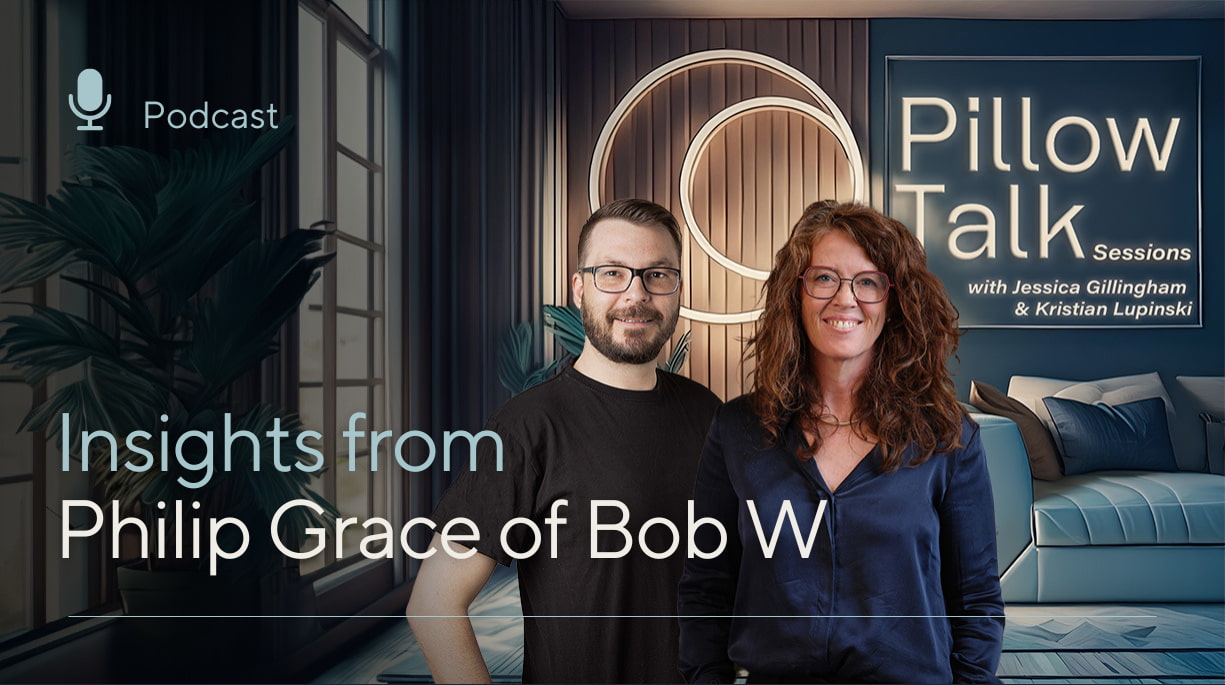
In this episode of Pillow Talk Sessions, Philip Grace, Chief Development Officer at Bob W, joins hosts Jessica Gillingham and Kristian Lupinski to share how the brand is redefining hospitality and urban living across Europe. With over 35 years of real estate experience and a pioneering background in co-working, Philip offers an inside look at how Bob W is blurring the lines between living, working, and leisure through a tech-enabled, hospitality-first approach.
Bob W currently operates around 5,000 apartments across 75 buildings in 13 countries, combining a lean, asset-light lease model with innovative mixed-use concepts. From converting a Copenhagen police station into 165 apartments to building out Amsterdam Noord, a 126-unit development featuring co-working, rooftop leisure, and wellness facilities, Bob W is building a new kind of lifestyle brand for a generation that values both flexibility and connection.
At the center of the company’s philosophy is a simple belief: “everything is hospitality.” Whether it’s an office, a short-stay apartment, or a neighborhood café, Philip explains that every guest interaction should feel intuitive, human, and seamless. Bob W’s operations reflect this ethos — replacing traditional front desks with frictionless digital experiences, but always maintaining a human connection when it matters most. A late-night guest locked out, for instance, can reach support via WhatsApp and be instantly connected to a real team member for help — an example Philip describes as “technology creating raving fans.”
The vertical village concept sits at the heart of Bob W’s development strategy. Inspired by the long-term success of Canary Wharf, these multi-use ecosystems combine residential, hospitality, workspace, retail, and leisure — all under one roof. But success, Philip emphasizes, depends on vision. Unlike the typical five-year development cycles that dominate real estate, vertical villages require 15 to 20 years of commitment and partnership between investors, operators, and local authorities.
Bob W’s Amsterdam Noord project exemplifies this model. Rather than running every aspect in-house, Bob W manages the accommodation while partnering with specialists to operate the yoga studios, restaurant, and co-working areas. This partnership-based structure reduces costs, enhances service, and ensures each space is run by experts in their field — a stark contrast to the outdated “one-operator-does-all” model still common across hospitality and co-working.
But scaling innovation comes with challenges. Philip highlights how industry silos — between logistics, office, and hospitality sectors — often prevent flexible use of space. Planning authorities, he notes, can also be slow to adapt, though forward-thinking examples like the City of London’s support for office-to-hospitality conversions show progress. Bob W’s success lies in navigating these obstacles through creative partnerships and an adaptable, tech-driven operating model.
That technology is central to Bob W’s DNA. The company’s 30-person engineering team in Tallinn continues to evolve its proprietary platform, integrating everything from airport transfers for business travelers to analytics on guest behavior, room usage, and partner performance. This data-driven approach not only enhances operations but also drives sustainability, reducing unnecessary cleaning and energy use during shorter stays. The result is a 75% repeat booking rate, with many guests booking directly through Bob W’s “Inner Circle” program — a testament to its personalized, relationship-based service.
Philip also reflects on how AI is shaping both operations and culture at Bob W. From automating legal reviews to assisting guest communications, AI boosts productivity while freeing teams to focus on creativity and human interaction. He sees the emerging AI-native generation — today’s Gen Z workforce — as the next catalyst for innovation, just as digital natives transformed workplaces two decades ago.
Looking ahead, Bob W is continuing its European expansion through long-term lease partnerships and adaptive reuse projects, turning underutilized spaces into thriving, tech-enabled communities. For Philip, this evolution represents more than just business growth — it’s a redefinition of what hospitality can be when technology, design, and human experience come together.