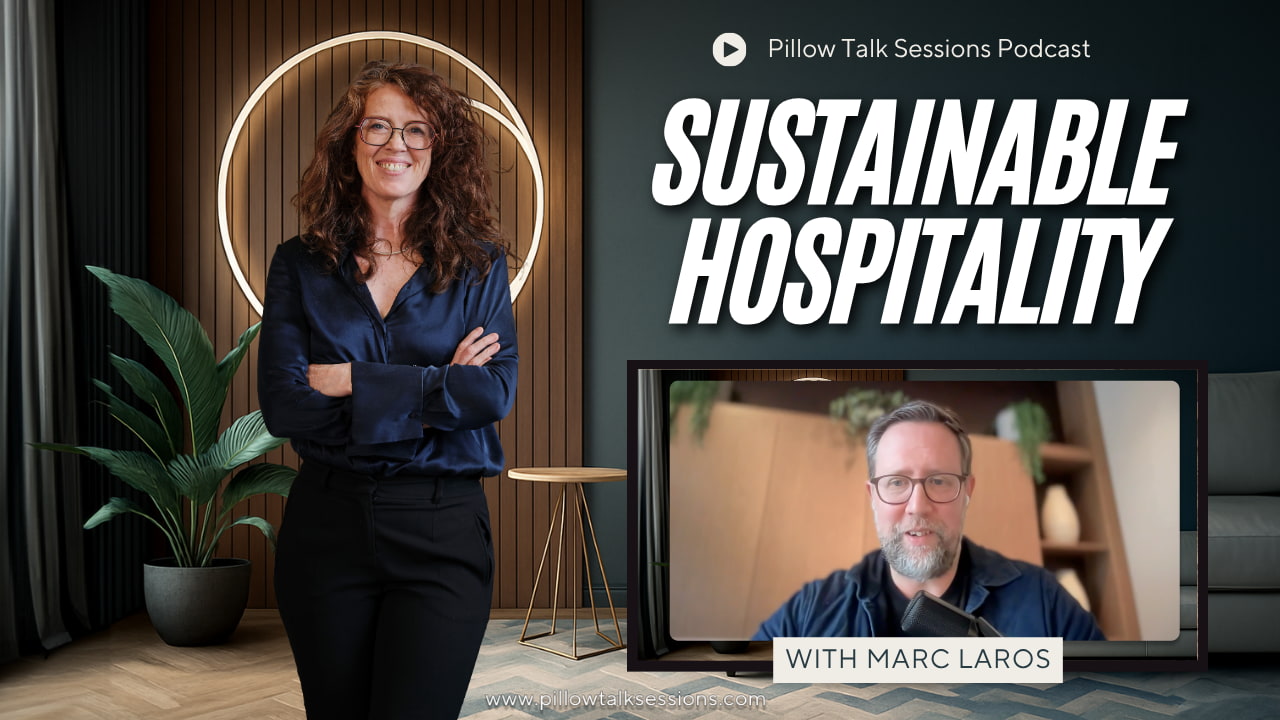
In this episode of Pillow Talk Sessions, Marc Laros, CTO at The Usual Hotels, joins host Jessica Gillingham to explore how sustainability, technology, and operational design are coming together to shape a new model for hospitality – one built for both efficiency and long-term impact.
The Usual Hotels is positioning itself as a sustainability-led European hotel brand, with a plan to grow to around 20 properties over the next five years. Currently operating in Brussels and Rotterdam, with a new opening in Florence, the brand is built around a clear principle: sustainability should sit at the core of both the guest experience and operational strategy.
Marc explains how this approach extends beyond environmental initiatives. The focus is on combining social impact, transparent reporting, and community integration with a technology stack that enables the business to scale without compromising experience.
The conversation dives into:
- How sustainability is embedded as a core brand pillar, supported by transparent reporting and measurable impact.
- Why community integration, from local sourcing to shared spaces, is a key differentiator in the guest experience.
- How pre-arrival data collection and QR-based check-in reduce friction and enable faster, more efficient arrivals.
- The role of automation in handling payments, administration, and backend processes to free up staff time.
- Why AI is being deployed across departments, from guest communication to housekeeping and finance workflows.
- The importance of building a flexible, modular tech stack that allows systems to be replaced or upgraded as needed.
Guest journey design is a central focus. Guests complete check-in before arrival, receive a QR code, and can access kiosks that reduce the process to seconds. Multiple communication channels, including WhatsApp and SMS, ensure consistent access and support.
Behind the scenes, automation removes administrative burden. Tasks such as payment processing, folio management, and internal coordination are handled digitally, allowing staff to focus on guest interaction rather than system management.
AI is increasingly being integrated into this model. Agentic systems are used to manage guest requests, support upselling, and assist operational workflows across multiple departments. These systems are designed to work alongside staff, with clear escalation paths to human teams when needed.
The underlying technology architecture supports this flexibility. A middleware-based approach connects systems across the business, enabling AI and other tools to access and act on data from multiple sources. This allows the company to adapt quickly, replacing vendors or adding new capabilities without disrupting the overall operation.
At a brand level, The Usual Hotels is also rethinking loyalty. Instead of traditional points-based systems, the focus is on building emotional connection through purpose, highlighting guest contributions to sustainability initiatives during their stay.
From an operational perspective, technology is used to improve staff experience as much as guest experience. By removing repetitive tasks, teams are able to focus on hospitality, which also supports recruitment and retention in a challenging labor market.
Looking ahead, the company is continuing to expand across Europe while investing in further innovation. This includes pilots for app-free room access via Apple Wallet, expanded AI capabilities, and ongoing evaluation of systems to ensure they support both integration and guest experience.