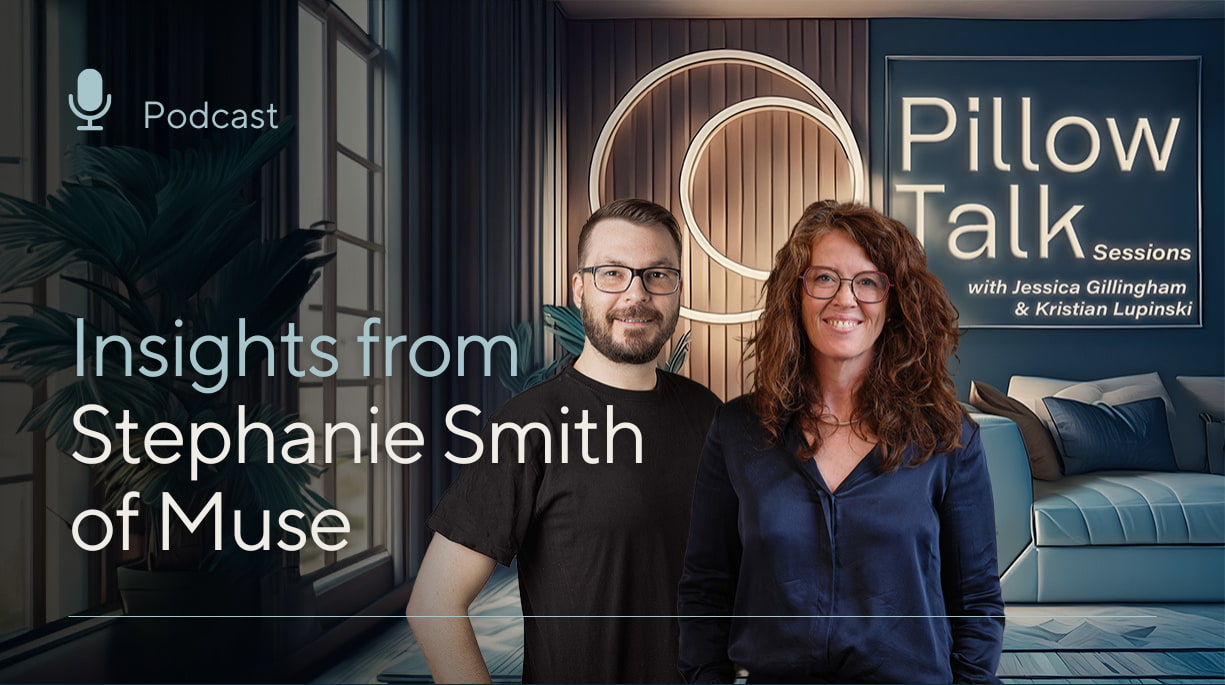
In this episode of Pillow Talk Sessions, Stephanie Smith, Head of Residential at Muse, joins hosts Jessica Gillingham and Kristian Lupinski to talk about what it really means to build homes that last — not just structurally, but socially.
Her view is refreshingly simple: “Four good walls and excellent service” matter more than flashy add-ons. And for Muse, that’s the brief.
Stephanie shared how Muse is taking a long-term approach to regeneration. In places like Southampton, developments evolve over 10 to 15 years, giving people time to grow roots and shape the space themselves. She described residents hosting knitting clubs and potlucks — small signs that a building is becoming a community.
Muse’s model actively involves local voices. Stephanie spoke about early engagement with schools, parents, and foundations to inform everything from lighting design to neurodivergent-adapted homes. It’s not about parachuting into a neighborhood. It’s about being part of it.
On the commercial side, Muse isn’t just filling ground floors with retail for the sake of it. Think NHS hubs, creches, artist spaces — places with purpose, shaped by local need. It’s a subtle shift, but one that says: we’re building for life, not just footfall.
There was also an honest take on how Muse works with investors. Not every fund wants a mixed-use project — but by inviting multiple investors into different blocks of a single development, Muse can unlock more value, faster. Stephanie noted a growing appetite among capital partners for longer holds aligned with social impact. That’s changing the conversation.
And the tech? It’s not about the next shiny thing. Stephanie described a shift from “tech for tech’s sake” to useful tools that reduce costs and improve safety. Like gait-sensing lights in later-living buildings that detect falls. Or Passive House design that cuts resident utility bills by nearly 90%.
When asked about affordability, Stephanie drew a firm line between regeneration and gentrification. Muse aims to add homes without pushing people out — through a mix of tenures and price points that serve the “squeezed middle” too often overlooked by policy.
And speaking of policy — Stephanie didn’t call for more. She called for better. Clearer frameworks. Smarter regulation. And real alignment between government and industry on what actually works.
Muse’s pipeline is growing fast — nearly doubling to 18,000 homes this year — across towns like Slough, Oldham, and St Helens. But the growth feels grounded. With long-term partners like Habico and English Cities Fund, Muse is focused on delivering not just homes, but neighborhoods people want to stay in.
They’re backing that up with data. The Sustainable Futures Report, led by Head of Sustainability Sarita, tracks carbon footprint, social impact, and long-term outcomes. Because trust, Stephanie reminded us, isn’t just built with promises — it’s built with proof.