For hospitality technology and proptech companies, 2026 is shaping up to be a pivotal year. The market is maturing, competition is intensifying, and investor expectations are higher than ever. At the same time, the way audiences discover, evaluate, and trust brands continues to evolve. Traditional media coverage remains an important signal of credibility, but it is now only one part of a much broader visibility landscape. Search visibility, peer recommendations, and AI-driven discovery are increasingly influencing which brands are seen, trusted, and remembered.
For ambitious companies, this transformation presents both risk and opportunity. Those that continue to approach PR reactively may struggle to maintain relevance, while those that integrate communications into their core business strategy will strengthen credibility and market authority. With 2026 on the horizon, now is the time for hospitality tech and proptech leaders to assess where their communications stand and to build a framework for lasting visibility.
Below are five guiding principles for developing a PR strategy that aligns with business goals and supports sustainable growth in the year ahead.
1. Anchor PR Goals to Business Outcomes
Effective PR strategies begin with alignment. Communications activity should be shaped by a clear understanding of the company’s direction, priorities, and ambitions for the year ahead. Whether the focus is on market expansion, funding, or reputation building, PR works best when it directly supports those objectives.
This clarity turns communications into a growth tool rather than a reactive function. Campaigns can then be designed to serve a purpose — advancing commercial goals, building investor confidence, or reinforcing leadership positioning. Every announcement, interview, and media engagement becomes part of a cohesive story that moves the business forward.
2. Assess the Competitive Landscape Before Defining the Message
In sectors as fast-moving as hospitality technology and proptech, visibility depends on differentiation. Understanding the competitive landscape is therefore essential before finalizing positioning or messaging.
A detailed view of how peers are appearing in the media, what themes they are owning, and how they are perceived by investors and customers can reveal where opportunities exist. The goal is not imitation but insight. By identifying oversaturated topics and underrepresented perspectives, brands can pinpoint the spaces where they can add unique value.
A clear grasp of this context allows communications strategies to focus on originality and leadership rather than repetition. It also helps ensure that messaging resonates with the right audiences and aligns with the wider market conversation.
3. Build a Clear, Consistent Narrative
A strong narrative acts as the thread that connects a company’s story across all channels. In an increasingly competitive market, consistency is one of the most powerful assets a brand can have. Fragmented messaging dilutes impact, while a unified narrative reinforces credibility and recognition over time.
The most effective stories are not complex; they are clear, confident, and rooted in real value. When a company articulates what it stands for and why it matters in simple, compelling terms, every communication — from product coverage to thought leadership — reinforces that identity.
Maintaining message consistency across global markets, investor materials, leadership commentary, and marketing channels ensures that audiences always encounter the same story, strengthening both familiarity and trust.
4. Evaluate Visibility Beyond Traditional Media
The definition of visibility has expanded dramatically. Today, a brand’s presence is measured not only by media coverage but also by how it appears in search engines, recommendation tools, and AI-driven summaries. These channels now influence the perceptions of investors, customers, and even journalists.
Evaluating visibility across this wider ecosystem allows businesses to understand how they are discovered and represented. Some may find they dominate traditional trade press but lack visibility in emerging digital spaces. Others may have a strong social media presence but limited recognition in authoritative outlets.
A holistic visibility audit reveals these imbalances and helps communications teams focus resources effectively. In 2026, the brands that will lead are those that recognize how credibility is earned and reinforced across both human and algorithmic discovery.
5. Replace Reaction with Roadmap
Sustained visibility requires structure. Many companies operate reactively, responding to opportunities as they arise. A more strategic approach is to create a clear roadmap that aligns communications with business milestones, product launches, and seasonal industry moments.
A six- to twelve-month plan brings rhythm and predictability to communications, allowing teams to anticipate opportunities rather than chase them. It also enables stronger storytelling, where each announcement or feature builds on the last to create momentum and coherence.
When communications are guided by a roadmap, messaging becomes more consistent, campaigns more impactful, and leadership more confident in articulating the company’s vision.
Setting the Stage for 2026
The coming year will reward hospitality technology and proptech brands that invest in clarity and structure. A well-defined PR strategy does more than generate coverage; it builds long-term credibility, internal alignment, and authority in the markets that matter most.
With increased competition and rapidly evolving discovery platforms, the brands that plan ahead will be those best positioned to influence the conversation in 2026.
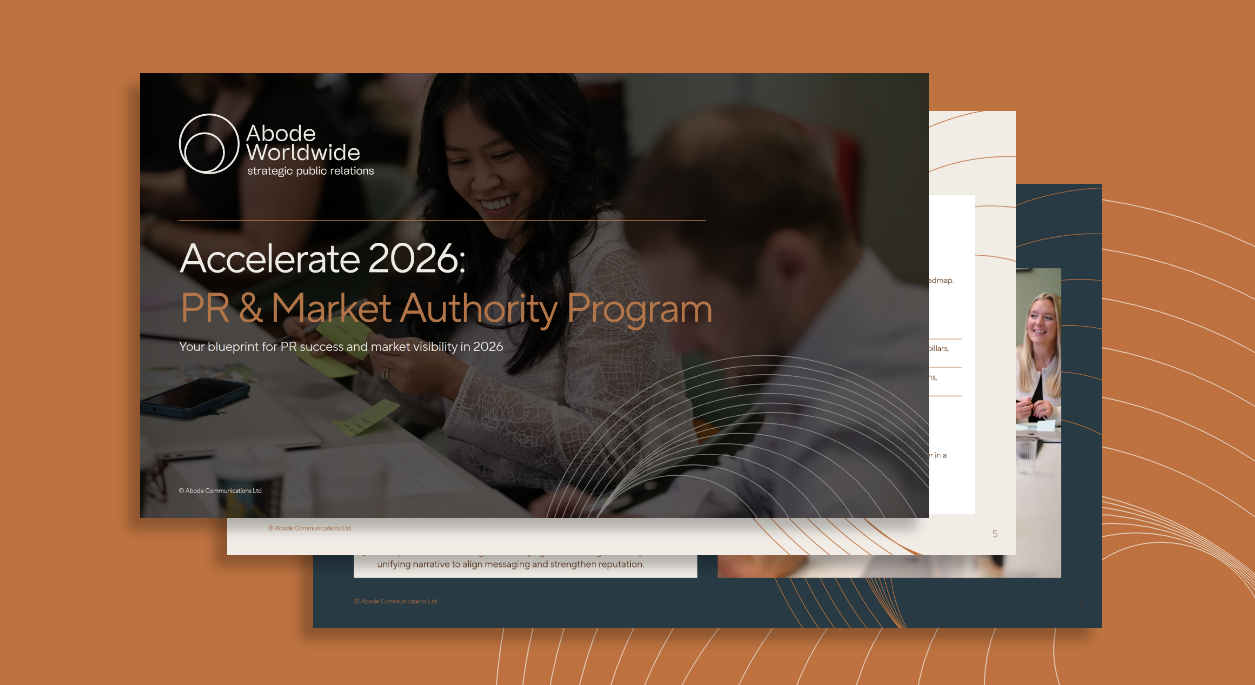
At Abode Worldwide, we have developed Accelerate 2026: PR & Market Authority Program for companies ready to take that step. This eight-week program equips hospitality technology and proptech brands with a complete blueprint for PR success in 2026 — from competitor and media analysis to messaging frameworks and a tailored communications roadmap.
By the end of the program, participants emerge with clarity, confidence, and a strategy built to strengthen visibility and authority across their markets.
For brands aiming to define their position and elevate recognition in 2026, now is the time to accelerate.
Learn more about Accelerate 2026 here
Ready to accelerate your visibility? Book a call with the team here.